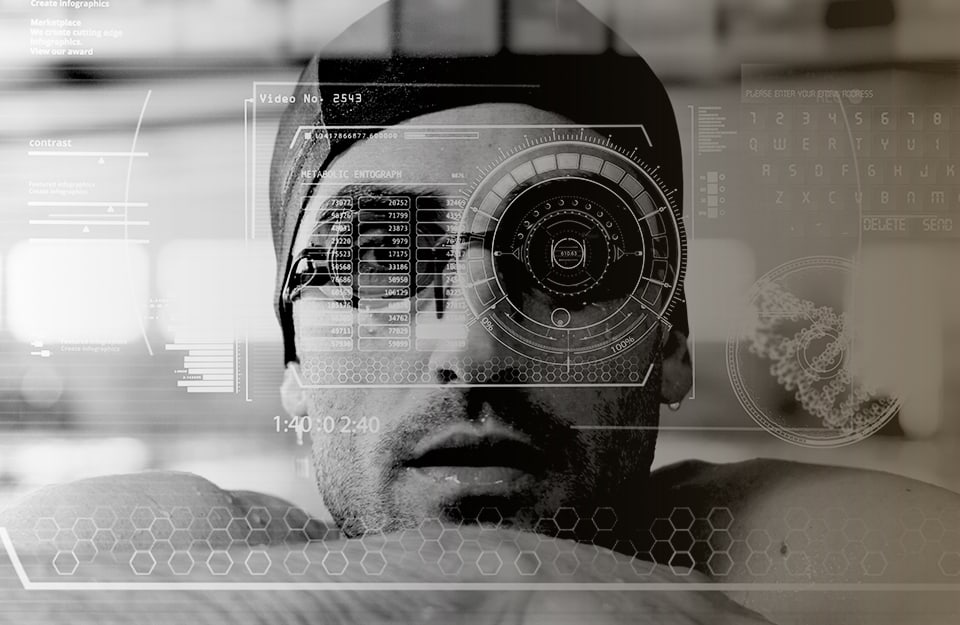
As athletic performance coaches, we train several qualities to prepare our athletes for the demands of their sport within a specified time frame. Be it absolute strength, rate of force development, tendon quality, grip, prehab components, or single joint strength. We try to fit so many things into one macro cycle or training year for our athletes that we may miss the little things that are right in front of our eyes. See what I did there.
We have developed all kinds of programs that help athletes get stronger and faster with the hope of getting better bulletproof. When we enter the powerful and unpredictable world of sports, we tend to fail in keeping our athletes in the game, on the field, or on the track, and we continue to do the same things we did in the past. We haven’t learned our lesson. More power! More mobility! More power! More does not mean a tougher athlete. This may be part of the performance puzzle, but a key piece is missing.
If we want change, we may have to look at what we’re not doing. We train muscles. We train tendons. We train quick burst skills. We do the best soft tissue therapy and the best conditioning, but we still don’t always get the results we want. The changes we desire may already be before us, training neurological pathways and the vestibular system. Addressing these subsystems in sports performance is important because most of these pathways are understimulated by conventional training means. Complexity and novelty drive brain function. The more recent the stimulus, the more attention your brain will pay to what you’re doing—and you won’t go broke paying attention.
When I said nerveI’m talking about the sensory pathways the brain uses to sense, see, and predict where you are in space and how to navigate through it. Most athletes will experience some type of subclinical vestibular or visual problem that—if treated generally—will provide major benefits in reflexive movement patterns. Improving the parts of the brain involved in spatial awareness, vision, balance, and coordination allows athletes to see more of what is happening to them and increases awareness of their surroundings. This is very important in sports not only to prevent head trauma but also to prevent accidents that can lead to other injuries in general.
Use Quick Vision and Decision Making as Part of the Warm Up
If given enough time, warming up before a training session can turn into a boring routine. Daily sessions can often benefit from slight exercise modifications, but a skilled trainer can select warm-up exercises that yield more benefits.
Exercise is not just about the muscular and kinesthetic system. It is also about the athlete’s visual and vestibular systems. More and more coaches are starting to learn that there is more to vision than just “seeing,” but understand that vision is related to more neural networks than just the ability to see something.
In “Light, the Medicine of the Future,” Jacob Liberman tells us that light and vision play a role in regulating the hypothalamus, autonomic nervous system, and endocrine system. All vital systems are run autonomously by our brain. Integrating visual-based and decision-making aspects into warm-ups can also allow coaches to assess movement quality when athletes must react visually to a stimulus, and not just perform “canned” movements that they can repeat and learn in a closed environment.
So what can we do as a warm-up to train this system?
There are 3 things anyone can do in their warm-up to improve these qualities and get the most out of your 10-15 minute blood pump.
jump– This can best benefit rotational competency and spatial awareness. By telling an athlete to keep their eyes off the ground and look up/down while completing this drill, the athlete gets a different perspective that forces them to hold their position and figure out where they are in space.
roll– Rolling is a vestibular compromise, it throws the body. Rolling drills as a warm-up are a great way to help the athlete know what’s going on from the start. Your inner ear is the single most important sensory function your brain and body need to function at a high level. If your vestibular system is compromised, this poses a major threat to your movement world.
Pursuit and Eye Saccades– Something I learned from Dan Fichter (Wanna Get Fast) is rapid eye movements or rapid eye movements. Saccades are eye movements that quickly shift the eye’s focus between two fixed points. They are used whenever your gaze moves from one point of gaze fixation to another. Our brain uses saccadic eye movements to create a continuously updated, unconscious map of our body in relation to its environment. Visual stimulation from our eyes will produce neural activity in a part of our brain called the superior collicus, which is why this subconscious map is called the ‘collicular map’. This subconscious map allows us to reach for objects beyond our range of vision, avoid obstacles, and balance as we move. However, if our brains are injured, then these maps will be faulty – causing us to be clumsy, bump into objects, or get lost while reading.
Use Vision as Part of Workout and Rest Intervals
In most high school and university training sessions, team training with groups of 60 people is popular. With this many people, it would be very challenging to implement a large number of exercises in each training block as it requires time and space to do so. Something I learned from my mentor at UW-River Falls, Coach Carmen Pata, was to implement vision training as a drill during training sessions to help with recovery during the training block and for the added benefit of the vision training itself.
Now, I’m going to try my hardest not to plagiarize his work on SimpliFaster (see his article here:) but he’s got it right in terms of creating workouts that athletes can do in between sets of compound exercises or heavier assist exercises.
Here are 2 more things athletes can do between sets to improve their visual acuity and increase rest time
Vision Chart– Athletes match letters and numbers from two sets of charts. One is smaller (4″x6″) held in their hand while the other is larger (8.5″x11″) and mounted approximately 6-8 feet from the athlete. Their task is to read their handheld cards like a book, with different clues such as “left to right” or “right to left” and then find the matching character on the furthest sheet as quickly as possible. The goal here is to get the fastest possible eye movement with accurate targeting.
Hand Eyes– We’ve all heard of “hand-eye coordination,” popularized in sports training by throwing tennis balls and other objects and having an athlete catch the object with one hand or both. To upgrade it to a higher level, speed it up, and be harder to catch. A good tactic I saw and liked with Coach Pata was simple, shoot them with a Nerf Gun. Stand 10-15 feet away, aim for the sides of the head, chest, legs and have them catch the nerf bullets. Be more athletic than the guy in this video.
Using a Metronome and Long Isometrics
Human perception is a complex phenomenon. It involves continuous processing of a variety of sensory input while developing our own thoughts and the meaning assigned to them, often based on past experiences.
Perception is an important component of motor control, which I define simply as the control of movement. Shumway-Cook describes perception, cognition and action as components within the individual that drive motor control. They work together. Using a metronome in rehabilitation is nothing new but is typically more apparent in “neurorehabilitation” settings. Research shows a positive effect on the movement of Parkinson’s or post-stroke patients.
Metronome beats help us focus on simple aspects (rhythmicity) of complex movement skills (e.g. locomotion). The synchronization of sound and movement is referred to as sensory-motor synchronization. Sound can make a movement predictable and easier to perform. Evolutionarily, success in prediction = security. In his book “Why Zebras Don’t Get Ulcers” Robert Sapolsky talks about loss of control or predictability as “a powerful psychological factor that can trigger a stress response in itself or make other stressors seem more stressful.” Reducing threats is critical when optimizing movement.
So how do you use a long isometric metronome, or a long isometric one?
Long ISO or extreme ISO is an increase in muscle tension without a change in muscle length. A common extreme ISO is the “wall squat” where an athlete holds their body weight against a wall for a certain period of time. To make extreme ISO more complex and add vestibular training, we added a metronome, 60 beats per minute to be precise. This helps the athlete in focusing on the sound rather than the task. This helps them by training their vestibular system to synchronize with the movement and makes it easier. They are able to focus on the beat of the metronome rather than the pain in their legs, thereby helping them become a Longer Isometrics.
Now that the framework has been established for improving an athlete’s performance through vision training, all you need to do is test it.
If you decide to test any of these methods, please share on instagram with the hashtag #blacklabelathletics or #visiontraining. Please like and follow for more athletic performance related content.
“Burn the Boats”
News
Berita Teknologi
Berita Olahraga
Sports news
sports
Motivation
football prediction
technology
Berita Technologi
Berita Terkini
Tempat Wisata
News Flash
Football
Gaming
Game News
Gamers
Jasa Artikel
Jasa Backlink
Agen234
Agen234
Agen234
Resep
Cek Ongkir Cargo
Download Film